< Go Back
Sound Alarms: What are decibels?
Written by Michael Gibbard, published 08-14-19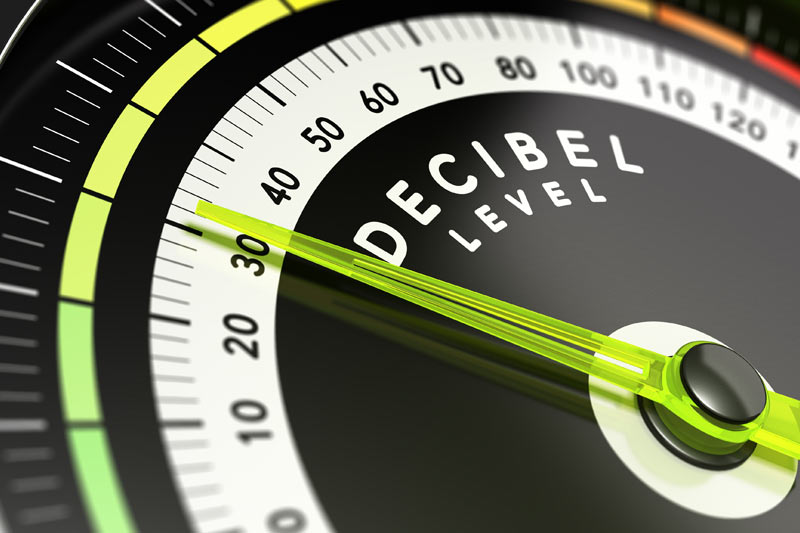
Many personal safety alarms aim to disorientate attackers with sound, pungent smelling spray or red dye. Some personal attack alarms will do all three.
But how do you measure the noise levels? …and how do they compare with everyday sounds?
To measure an extremely loud and high-pitched noise we use the measure of Decibels (dB). A good personal alarm should be about 120dB or more. That’s the same noise level as being at the front row of a rock concert.
But how does the sound level measure work?
The key to understanding decibel levels is to know that the increase in levels is exponential. So for every 100 times the sound volume is the decibel measure increases by a factor of 2 i.e. doubles. For example if a sound that is ten times more powerful than absolute silence is 10dB but a sound that is 100 times more powerful than absolute silence is 20dB. Therefore, a sound 1,000 times more powerful than absolute silence is 30dB.
What about real world examples of decibel levels?
Decibel Everyday Noise Levels Compared
- 10dB: Absolute silence
- 40dB: Whispering
- 60dB: Normal conversation
- 85dB: Beginning of hearing damage range, earplugs should be worn
- 100dB: Normal average car or house stereo at maximum volume
- 120dB: Front row at a rock concert
- 130dB: Marching band of 200 members
- 140dB: Threshold of pain, all frequencies
- 145dB: Vision blurs due to eyeball vibration
- 150dB: Loud rock concert, at speakers
- 150dB: Sensation of being compressed as if underwater
- 163dB: Possible glass breaking level
- 165dB: Jet airplane at take off





Leave a Reply
You must be logged in to post a comment.